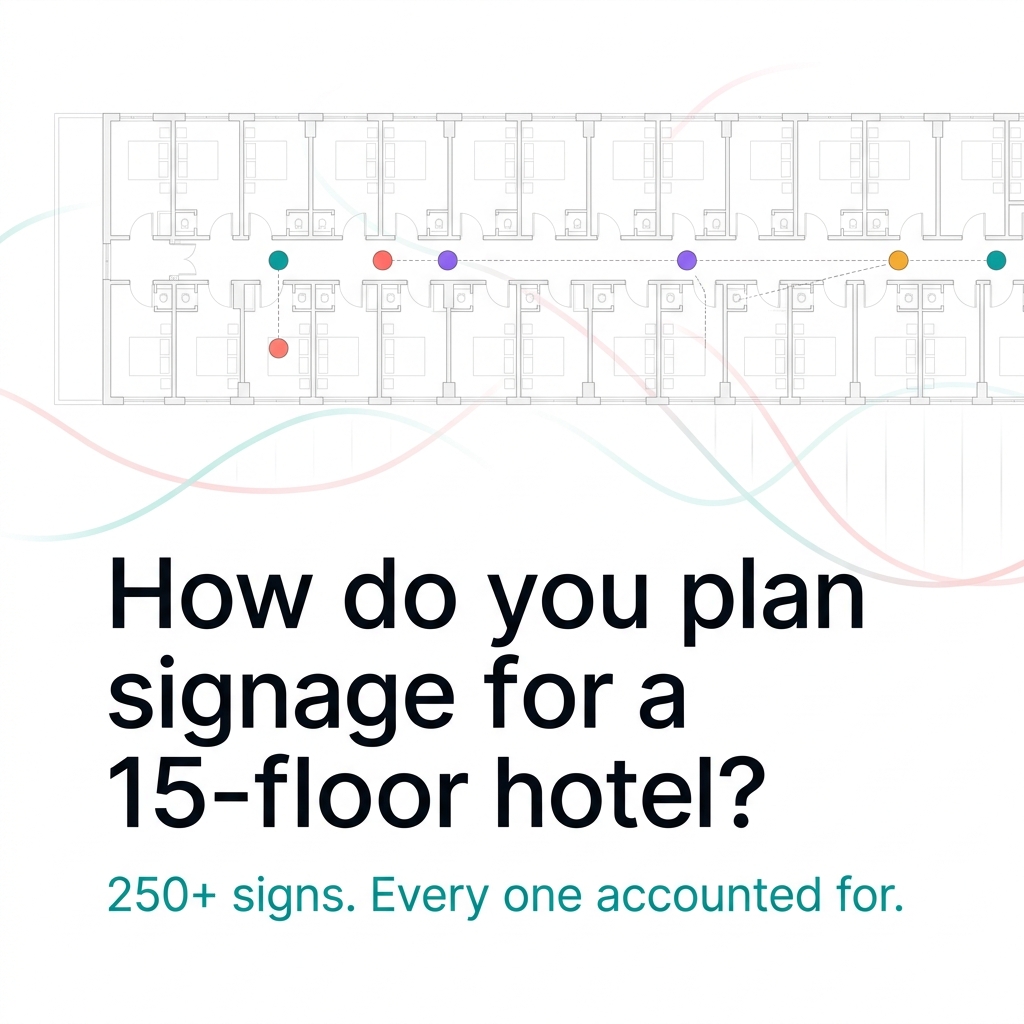
Why Hotel Signage Planning Matters
Hotels operate in a unique environment: guests are unfamiliar with the layout, may not speak the local language, and need to navigate across multiple floors with different functions — rooms, restaurants, conference halls, spa, parking.
A well-planned signage system reduces guest confusion, minimizes front-desk enquiries, and contributes to the perceived quality of the property.
Types of Hotel Signs
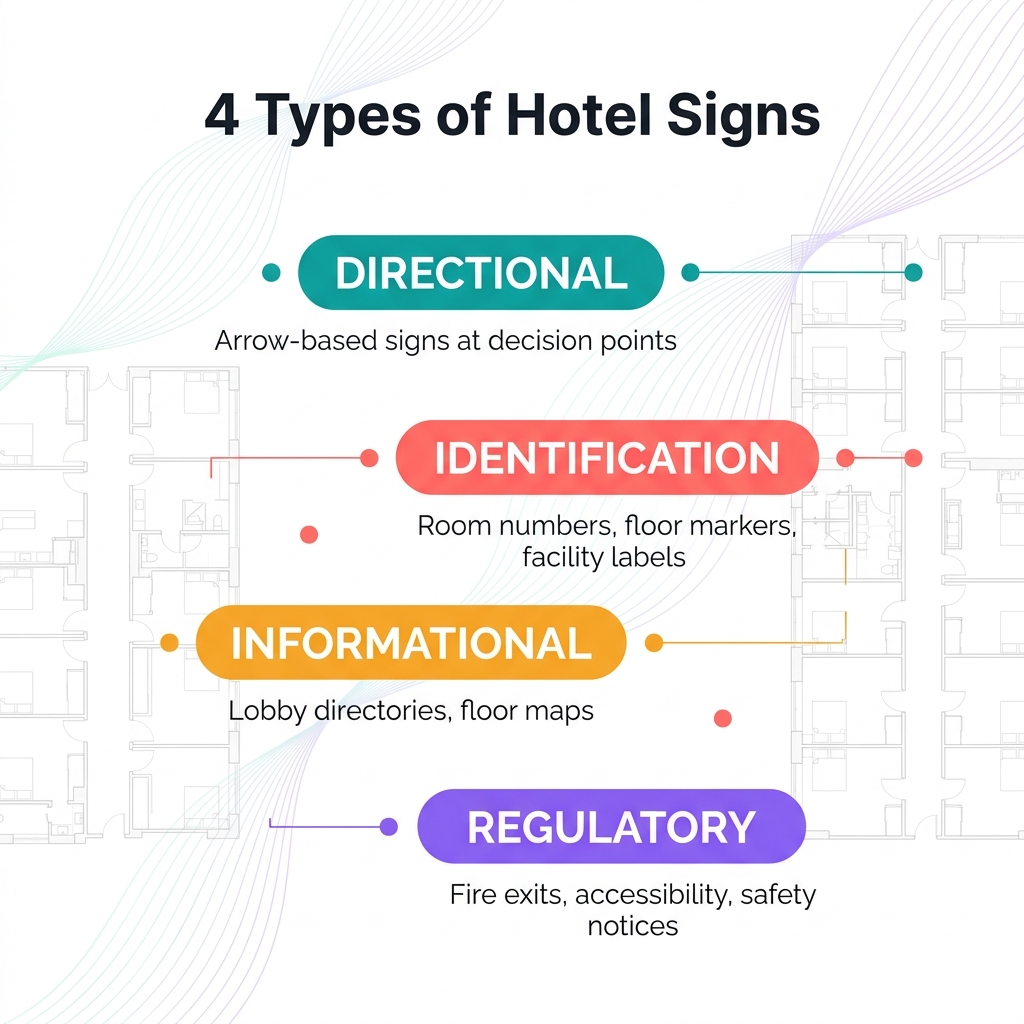
Hotel signage typically falls into four categories:
- Directional — Arrow-based signs at decision points guiding guests to rooms, amenities, and exits
- Identification — Room numbers, floor markers, and facility labels (Gym, Pool, Business Centre)
- Informational — Lobby directories, floor maps, and rate boards
- Regulatory — Fire exit routes, accessibility markers, no-smoking zones, and safety notices
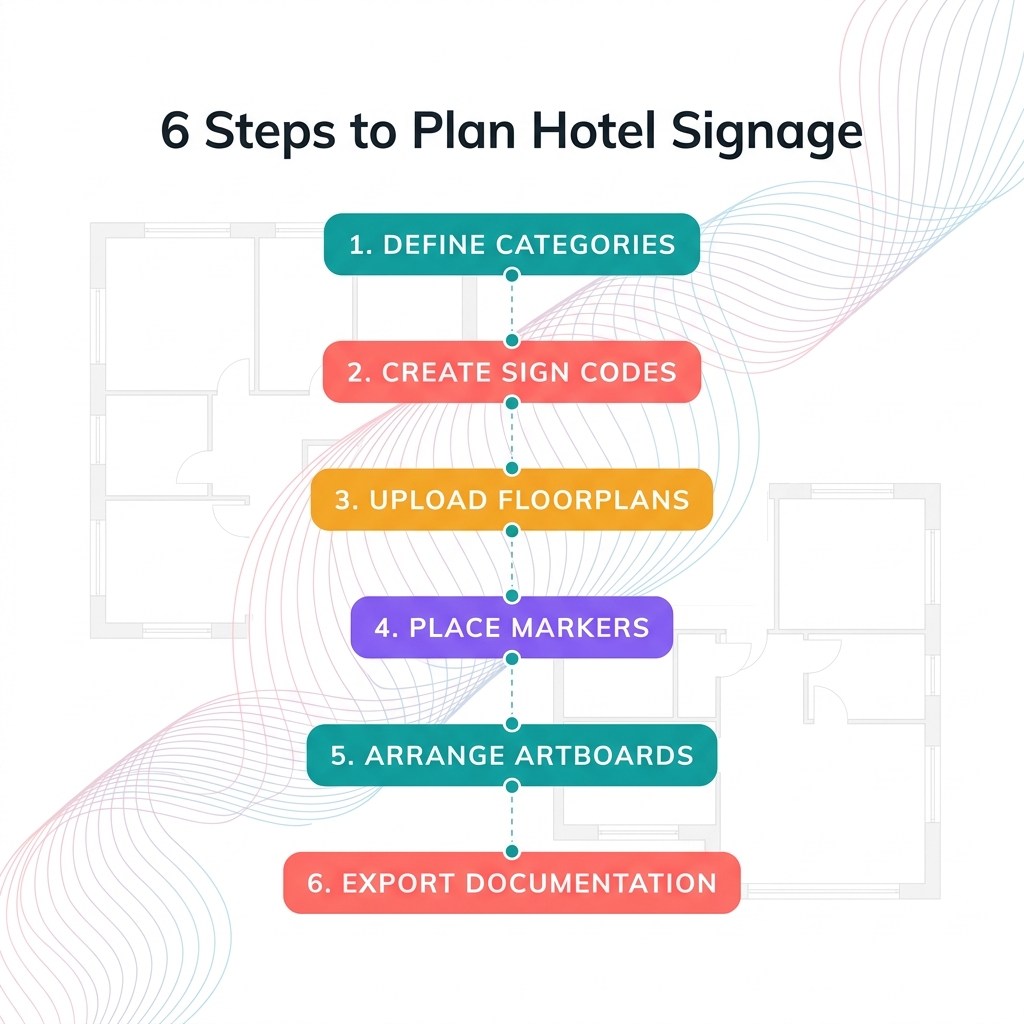
Step-by-Step Hotel Signage Planning
1. Define Sign Categories
Start by setting up the sign categories for the project. Hotels typically use all four functional categories, with sub-types specific to hospitality (guest room numbering, lobby directories, pool area signage).
2. Create Sign Codes
Create sign codes within each category:
- D-01: Corridor directional arrow
- D-02: Lift lobby directional panel
- ID-01: Guest room number plate
- ID-02: Facility identification sign
- IF-01: Lobby directory board
- R-01: Fire exit route plan
Each code carries its material specification, dimensions, and mounting method.
3. Upload Floorplans
Upload floor plans for every level: lobby, typical guest floors, amenity levels (gym, pool, restaurant), basement parking, and service areas. Each floor gets its own workspace.
4. Place Sign Markers
Walk through each floor plan and place sign markers at every decision point — places where a guest must choose a direction. Common locations include:
- Main entrance and lobby area
- Lift lobbies on every floor
- Corridor junctions on guest floors
- Stairwell entries
- Amenity area approaches
- Parking level entries and exits
5. Arrange Artboards
Organize artboards to reflect the building structure. Hotels often have a typical floor layout that repeats across 10–20 floors. Arrange the artboards so the full system is visible and organized.
6. Export Documentation
Generate the complete sign schedule and BOQ. For hotels, the typical floor multiplication is important — if a directional sign appears at each lift lobby on 15 floors, the BOQ must accurately reflect 15 units.
Common Mistakes in Hotel Signage Planning
- Inconsistent naming — Different naming conventions used on different floors
- Missing decision points — Failing to place signs at lift lobbies, corridor junctions, and stairwell entries
- Ignoring service areas — Back-of-house corridors, loading docks, and staff areas also need signage
- Manual tracking — Using separate spreadsheets for each floor creates version conflicts
Scale Considerations
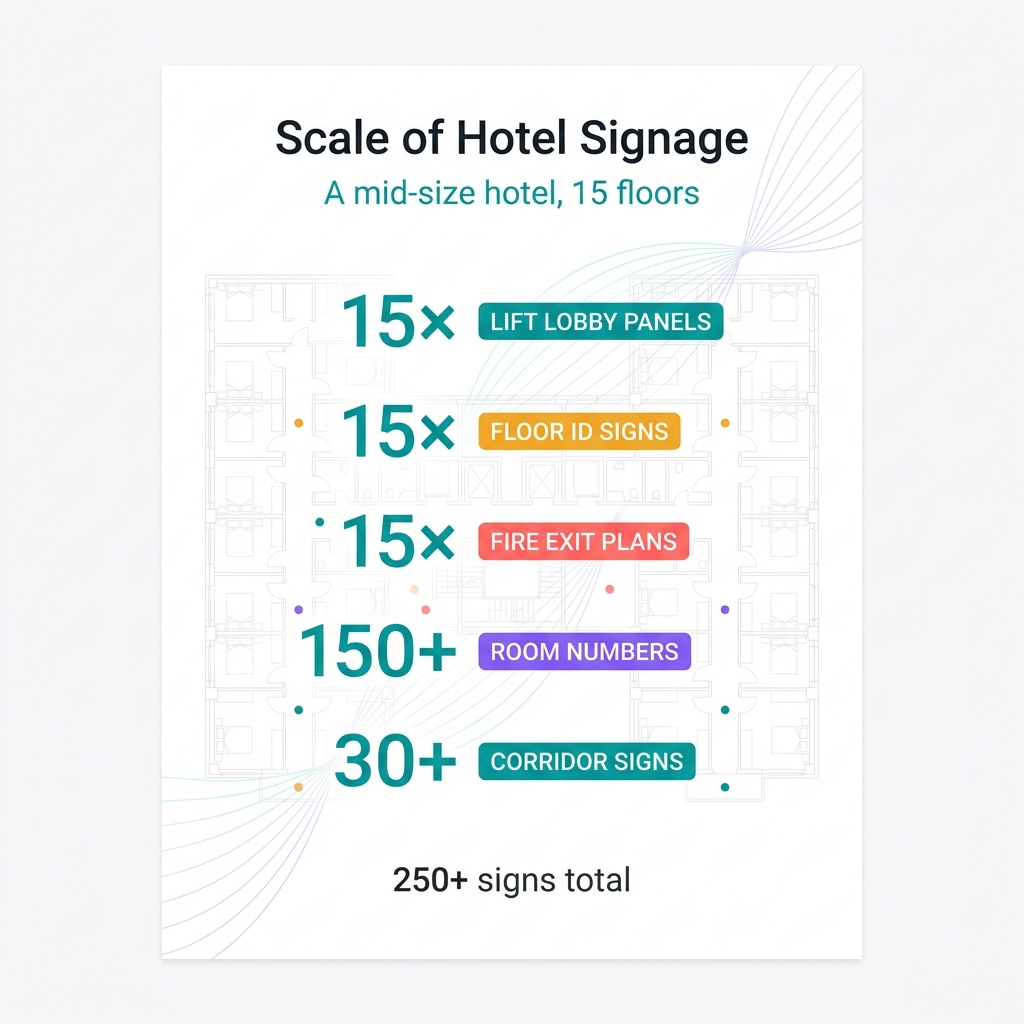
A mid-size hotel with 15 floors might have:
- 15 × lift lobby directional panels
- 15 × floor identification signs
- 15 × fire exit route plans
- 150+ guest room number plates
- 30+ corridor directional signs
- 20+ amenity and service signs
That is 250+ individual signs. A resort property with multiple buildings can exceed 800 signs. Structured planning is essential at this scale.