Planning
Signage planning is the process of organizing sign types, positions, and documentation for a building project. It connects design intent to fabrication — ensuring every sign is accounted for, correctly specified, and placed at the right location.
Workflow
A structured signage planning workflow follows six steps: define categories, create sign codes, upload floorplans, place markers, arrange artboards, and export documentation. This replaces the fragmented Illustrator-Excel process most teams use today.
Documentation
A sign schedule is a structured document that lists every sign in a building project with its code, type, description, location, and quantity. It is the single source of truth between the consultant, architect, and fabricator.
Documentation
A signage Bill of Quantities (BOQ) is a structured document that lists every sign type in a project with quantities, specifications, and materials. It is the bridge between the sign schedule and fabrication.
Industry
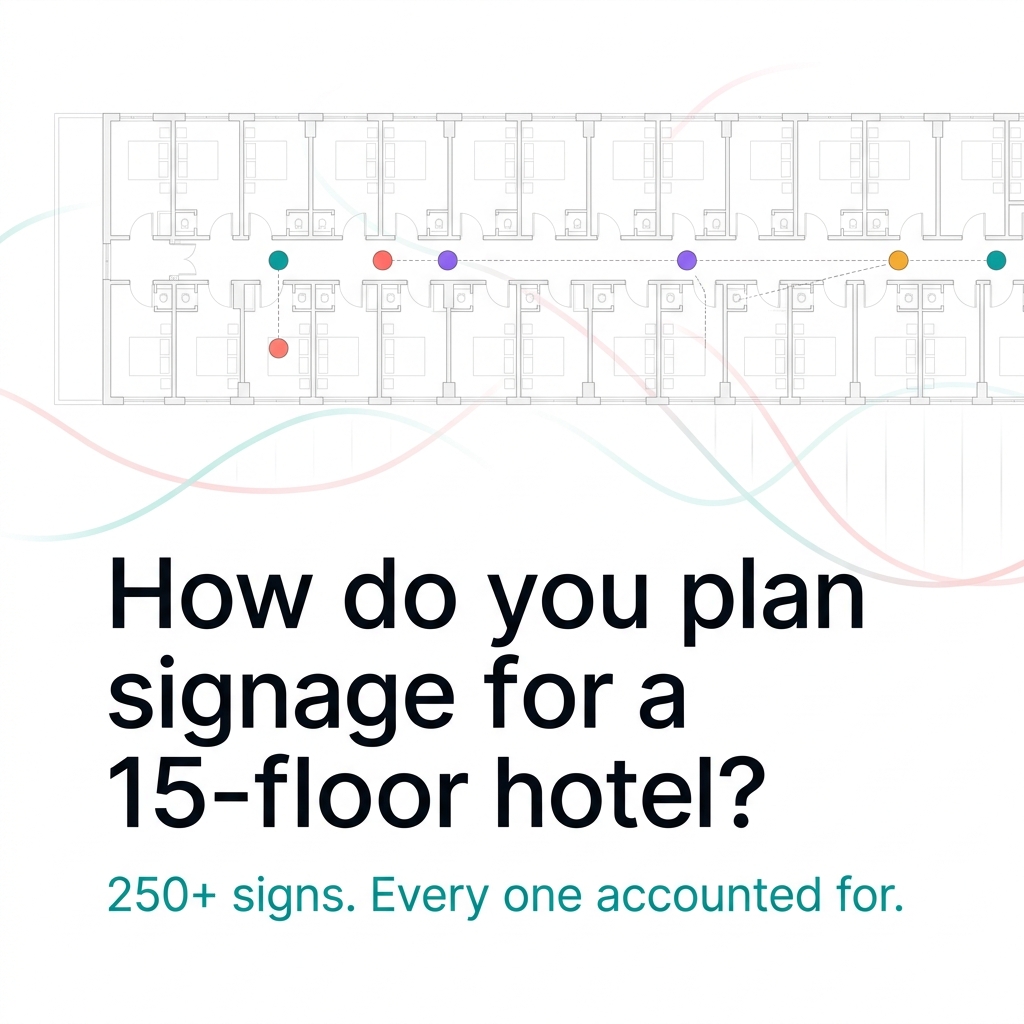
Hotel signage planning requires coordination across lobbies, guest floors, amenity areas, parking, and emergency routes. A structured workflow ensures consistent sign placement and accurate documentation across the entire property.
Industry
Malls present complex signage planning challenges — multiple floors, anchor tenants, food courts, parking structures, and regulatory requirements. A structured approach keeps the system organized and the documentation accurate.
Methodology
A sign taxonomy classifies every sign in a project by category, sub-type, material, and mounting method. It is the structural foundation that makes sign schedules readable and BOQs accurate.
Documentation
A sign schedule lists every individual sign with its location. A BOQ aggregates totals by type for procurement. They serve different audiences but are derived from the same planning data.
Workflow
Illustrator handles visuals. Excel handles data. Neither was built for signage planning. The disconnect between placement and documentation creates errors that compound as projects grow.
Industry
Condominium signage planning covers tower identification, floor-level wayfinding, parking structures, amenity areas, and regulatory compliance. Repeating floor layouts multiply the sign count quickly.
Industry
Hospital signage planning coordinates wayfinding, department identification, safety compliance, and accessibility across emergency rooms, wards, outpatient areas, and visitor zones. Accuracy is critical — a missed sign can delay patient care.
Planning
A signage planning checklist ensures every step is completed before fabrication begins — from category definition and code assignment to floorplan markup, schedule review, and BOQ validation. Skipping steps leads to costly rework.